Search This Blog

Wednesday, May 10, 2006

Visit the Stokes, Ottawa NWR, Ohio, May 13

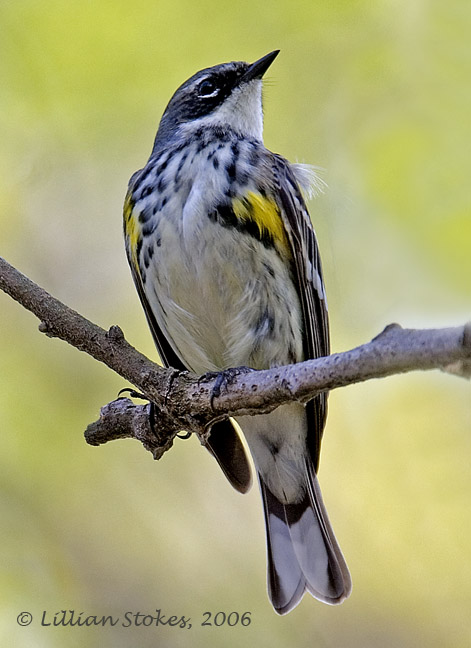
Yellow-rumped Warbler

We will be at Ottawa National Wildlife Refuge in Ohio (near Toledo), on Sat. May 13th, at 1:00 pm doing a book signing for our Stokes Field Guide to Warblers and introducing our Stokes Birding Series Binocular line. We will also be part of the International Migratory Bird Day Celebration festivities occuring there. So if you are in the area, come visit us.
Ottawa National Wildlife Refuge is right next to warbler birding hotspots Crane Creek State Park and Magee Marsh Wildlife Area. We hope we will see lots of migrating birds, especially warblers.
We leave tomorrow and we do not know how much access we will have to the internet. We will get back to you as soon as we can and hopefully, show you some nice photos from our trip.

Photo © Lillian Stokes, 2006

Tuesday, May 09, 2006

Hummers Remember


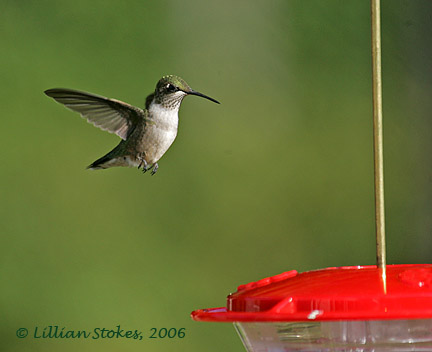
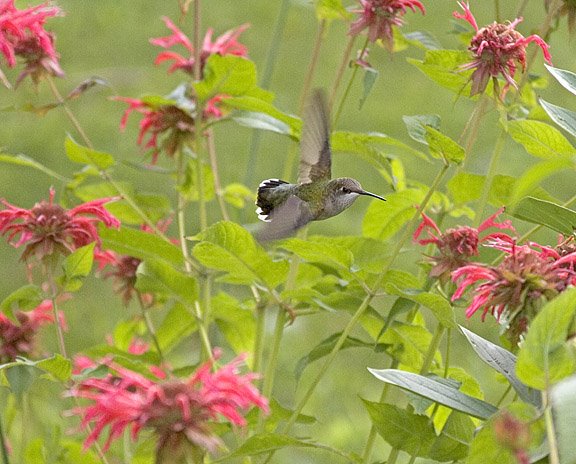
We walked through the garden and admired our Red Trillium that has 30 blooms. Then we stopped in front of our Trumpet Honeysuckle vine, not yet in bloom, and commented how last year we had hung a hummingbird feeder near it that was used by many hummmingbirds (see photo). We had just acknowledged that we hadn't put the feeder out yet when — zoom, a male Ruby-throated Hummingbird appeared and hovered right in front of the spot the feeder had been last year. They don't forget! He undoubtedly had been there last year and probably was wondering where his feeder was, now that he had returned.
Feeling slightly guilty, (but not overly so, since there is another hummer feeder up on the other side of the house) we went in the house and promtly made some hummingbird nectar.

Hummingbird Nectar Recipe

1 part white sugar
4 parts water
boil 1 minute to dissolve the sugar

We put out the feeder in its old location, ready and waiting for him tomorrow.

All photos © Lillian Stokes, 2006

Monday, May 08, 2006

Ravens


Today we went to see a Raven's nest that a friend had told us about yesterday. She said she had seen the Ravens with some fledglings near a tower by a large dam. When we arrived, we saw a Raven sitting in a tree giving calls. It raised its wings a few times, then flew away. A second Raven that had been in the woods followed it. There was no sign of the young birds. We could only guess that they must have moved further from the dam, and the parents were going to them. After walking down the slope and looking up under the catwalk bridge that led to the tower, we saw the nest. It was built under the catwalk on top of some pipes. We could only see the underside of the nest. It had sticks hanging down and whitewash from the young. Looked like a nice place to nest, nice and high with a roof to keep them dry, and a good view. Wished we had seen the young. Oh well, maybe next year.

Saturday, May 06, 2006

Mourning Cloak Butterfly


We are still picking daffodils from our "daffy meadow", an area where we planted several hundred daffodils 2 years ago. Yesterday we found a Mourning Cloak butterfly sunning itself on the bark mulch in our garden. It would not win the most beautiful butterfly award, but it's really neat to appreciate its subtle colors which make it camouflaged against bark. Mourning Cloaks are widespread across much of North America. They are one of the few butterflies who overwinter as adults, finding protected places in log piles, nooks, or under loose bark, and when they emerge in the spring they look worn, as this butterfly does. They are one of the longest lived butterflies and some may live as long as 10 months.
Mourning Cloaks feed on sap and fruit, rarely nectar, which is a good thing since there are not many flowers out yet. Males are territorial and defend areas of about 300 square yards and wait for females to fly by so they can court them. This is probably a male since we have seen him frequently in the same area. Hope he gets a mate.

All photos © Lillian Stokes, 2006

Friday, May 05, 2006

Bobolinks Return!


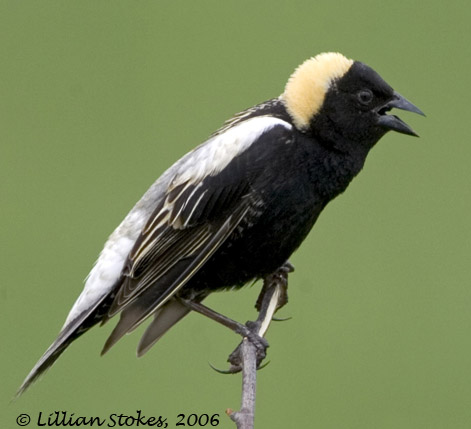
They're baaaack. Yeah! the first Bobolink returned today to our property, Bobolink Farm, named for the fact we have a large hayfield with nesting Bobolinks. We purchased the hayfield in spring 2004 and saved it from development. So the Bobolinks have a home here because of us. We always marvel that they have made the journey from their wintering areas in southern South America (mostly east of the Andes from Peru and central Brazil south to northern Argentina), and flown all the way back to us in southern NH. Wow!

Thursday, May 04, 2006

Birds Today

Today the skies cleared, after several days of much needed rain. Some new migrants have come in, with more expected tomorrow. Here is our today's list of birds seen (or heard) on our inland NH property, Bobolink Farm:

Osprey
Sharp-shinned Hawk
Turkey Vulture
Great Blue Heron
Black Duck
Canada Goose
American Crow
Starling
Common Grackle
Brown-headed Cowbird
Red-winged Blackbird
Blue Jay
American Robin
Warbling Vireo, first arrival
Mourning Dove
Brown Thrasher
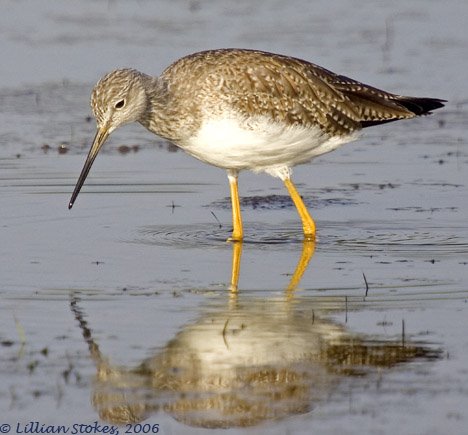
Greater Yellowlegs
Yellow-bellied Sapsucker, still excavating a nest
Downy Woodpecker
Northern Flicker
White-breasted Nuthatch
Black-capped Chickadee
Ruby-crowned Kinglet
Tufted Titmouse
Eastern Phoebe
Purple Finch
American Goldfinch
Pine Siskin
Nashville Warbler
Black-and-white Warbler
Yellow-rumped Warbler
Pine Warbler
Tree Swallow
Barn Swallow
White-throated Sparrow
Song Sparrow
American Woodcock
House Wren, first arrival

We are eager for others to arrive. We have not had the first hummer yet, even though the feeder has been out for more than a week. When will they arrive?

Photo © Lillian Stokes, 2006

Wednesday, May 03, 2006

10 Most Beautiful Birds


There is a blog meme going around as to one's pick for the 10 most beautiful birds, found in the ABA (American Birding Association) Checklist Area. Here is our personal pick for the 10 Most Beautiful Birds, including photos. If you like these, you're sure to like the 3,400 beautiful photos in our brand new field guide, Stokes Field Guide To The Birds Of North America. Get your copy now go here.


At the top of the list would be the * Painted Bunting, it's the cover photo for our new field guide, taken by Lillian.

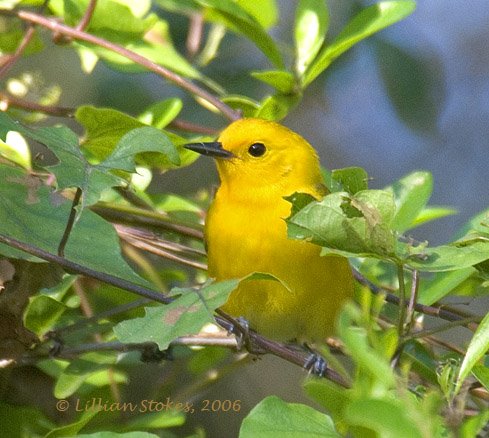
The * Prothonotary Warbler is melted butter beauty

The * Roseate Spoonbill is outrageous cotton candy pink

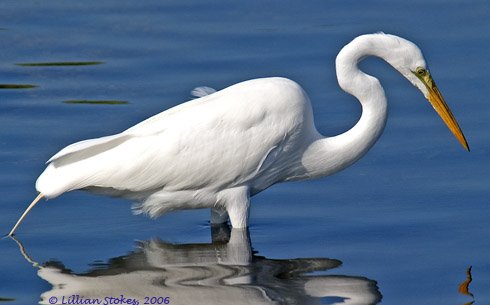
The * Great Egret is pure elegance

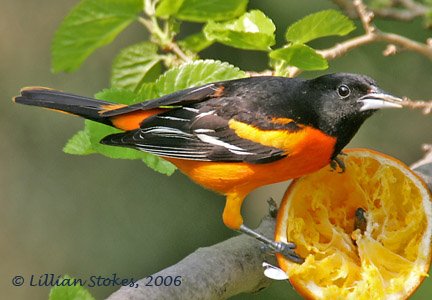
The * Baltimore Oriole is attention-grabbing black and orange

The * Black Skimmer has classic graphic colors

The * Northern Cardinal is oh, so red

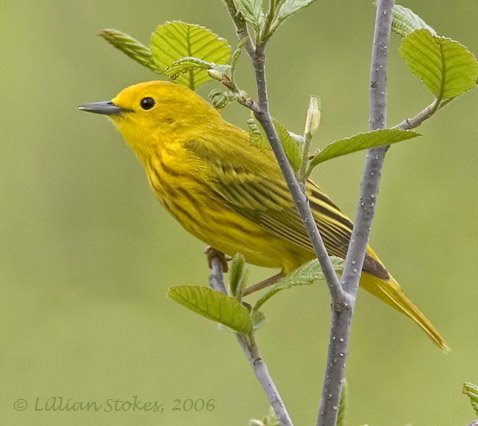
The * Yellow Warbler lights up the marshes

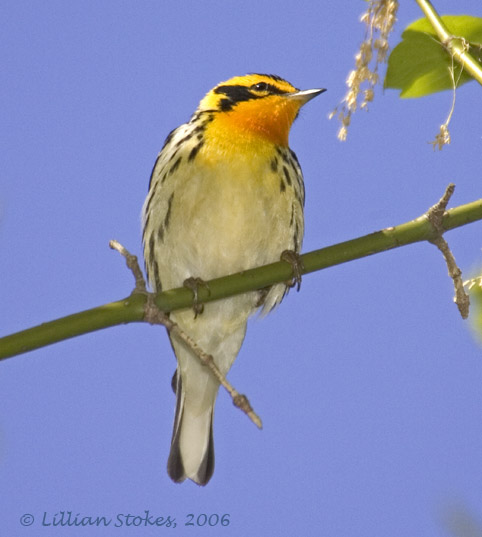
The * Blackburnian Warbler is the flame of beauty

The graceful flyer, * Swallow-tailed Kite, gets our vote

All photos © Lillian Stokes, 2006

Tuesday, May 02, 2006

Santa Chickadee

We noticed two chickadees exploring for nesting sites in our wooded area behind our barn, so we quickly put up a birdhouse and hoped they would use it. Several days later we saw that they had bought the real estate and were moving in. Mrs. Chickadee was busy bringing nesting material into the box. Wanting to roll out the red carpet, we put out nesting material for her. We took our dog, Daisy's, fur and offered it in a corn cob holder. A suet cage would have done as well. Eagle-eyed Mrs. Chickadee found the fur this morning and, beside herself, greedily grabbed large mouthfulls. She looked just like a birdie Santa Claus — Santa Chickadee!

Photo © Lillian Stokes, 2006

Monday, May 01, 2006

Birds First


Today we had some tree work done. We had some trees taken down, others limbed up, and some thinned, especially in a lovely grove of pine trees where we will have a lunaform pot we ordered for our wedding anniversay come to live. The tree workers suggested we take the "unsightly limbs" off the big pine pictured here. But the naturalist and bird lover in us said no, the pine was important because it provided great perches for birds. It also provided great bird watching opportunities for us, as birds come in and land there before they come to the feeder or to get the lay of the land. We have seen so many birds on those perches, everything from Sharp-shinned and Cooper's Hawks, who have designs on our feeder birds, to Mourning Doves who chow down at the feeders then rest and digest on the perches of the big pine. Mr. Cardinal, new on our property, is now singing from them.

So after a lot of discussion we reached a compromise. We would have the arborist carefully prune the limbs that hid the mountain ridgeline, then leave some artistic limbs for perching, because the birds come first.

All photos © Lillian Stokes, 2006

Saturday, April 29, 2006

Sound of Spring

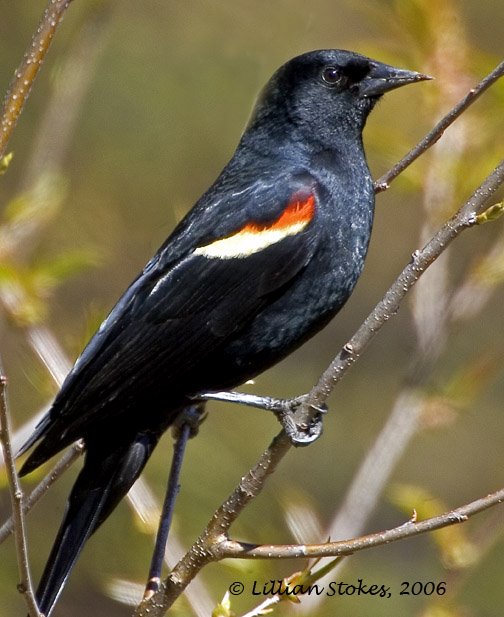
This Red-winged Blackbird posed near the feeder. We love the "O-kaa-lee" songs of the Red-winged Blackbirds who are breeding around the marshy edge of our pond, it is such a sound of spring.

Photo © Lillian Stokes, 2006

Friday, April 28, 2006

B.O.D. (Bird of the Day), Eastern Towhee


Just about every morning we look at birds, even if it is just out our window over a cup of coffee. We record in our journal the birds we see, and anything else interesting going on. We have a little daily "award" called the B.O.D., or Bird Of the Day that we give to the most unusual or special bird we record that day. Today's B.O.D. award goes to the Eastern Towhee that showed up at our feeder. We were first alerted to it by its "che-wink" call note. It was at our feeder eating cracked corn. The bird we saw today was a male, who is black above with rufous sides. The above photo is of a female we photographed last year. The Eastern Towhee used to be considered one species with the Spotted Towhee of the West, and both were called Rufous-sided Towhee. They are now considered separate species and have separate names.

The reason we consider this a special bird is that Eastern Towhees are a species whose population is in decline throughout its range, particularly in New England where we live. That is because their habitat of shrubby edges or open woods with shrub understory is being lost due to development. So we were pleased to host a towhee today, whether it is just a migrant, or decides to stay and breed.

Photo © Lillian Stokes, 2006

Thursday, April 27, 2006

Migration Celebration

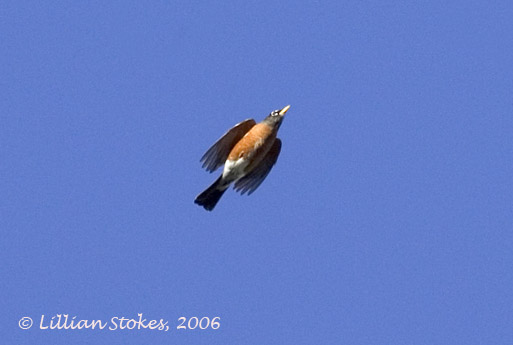
Migration has started all across North America. Billions of birds will be on the move from their wintering locations in the southern U. S., Central and South America. Braving sometimes disastrous weather, hoping refueling stops are available and breeding grounds still there, they travel above us, a vast avian treasure. It is up to us to insure their vital lands are protected and they survive. Look up, celebrate, and protect.

White Pelicans breed on lakes in the western parts of the U.S. and Canada

Short-earred Owls breed in the upper U.S. and in the vast, critical, Boreal Forest. 50% of the 700 species of birds that regularly occur in the U.S. and Canada rely on the Boreal for their survival.

Red Knots may soon become extinct if Horseshoe Crabs (whose eggs they eat for refueling food) in Delaware Bay aren't protected from overharvesting.


Ducks need their nesting grounds protected in the vast Prairie Pothole region of the U.S. and Canada, which can produce as much as 50% of the continental waterfowl population.

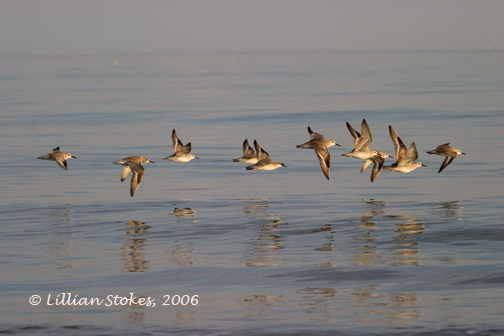
Spotted Sandpipers who breed on lakes and rivers across much of the U.S., need those shorelines protected.

And American Robins, who migrate through, and may stop to breed in your yard, need you to create good bird habitat on your own property and participate in local and national bird conservation, before even they become endangered.

All photos © Lillian Stokes, 2006

Wednesday, April 26, 2006

Red Mountain Majesty

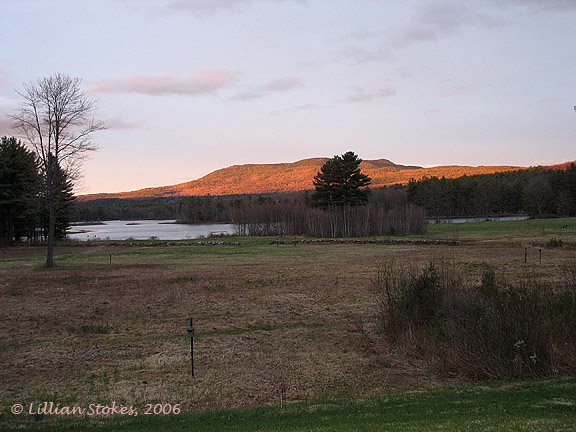
Last night the final rays of the setting sun created this beauty. We cherish moments like this and appreciate the rich diversity of habitats that is Bobolink Farm: meadow, hayfields, pond, estuary, woodlands, marsh. We feel a sense of accomplishment that we have placed it under conservation easement, and encourage others to do the same on lands that they treasure.
Photo © Lillian Stokes

Tuesday, April 25, 2006

Sapsucker and Tulips


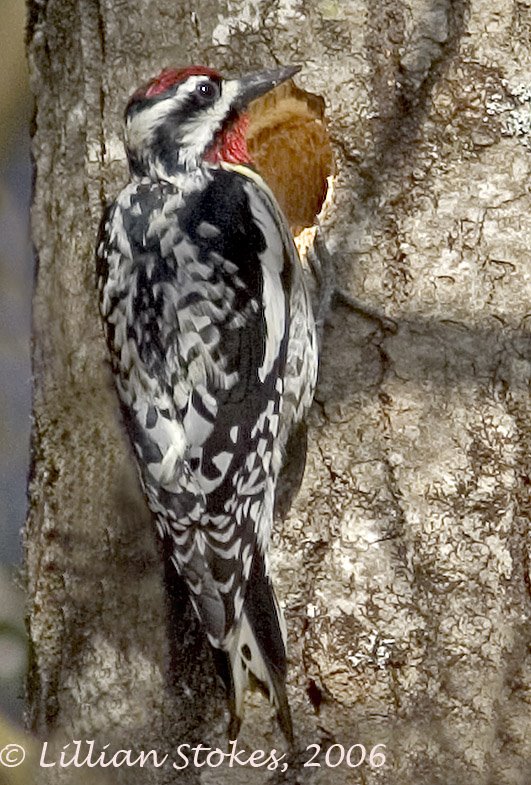
There is a Yellow-bellied Sapsucker excavating a nest hole in the woods behind our new garden. We dig in the earth and listen to the tapping, excavation sounds of wood being chisled. We are excited to think we will witness the nesting life of this bird.

Tulips are bursting, their petals uncurled, pollen-laden anthers visible agains the dark throat. The yellow stigma stands at attention, waiting to be pollinated. The promise of reproduction is in the air.
All photos © Lillian Stokes, 2006

Monday, April 24, 2006

Contoocook

Crows are always visible as we look out over our home, Bobolink Farm. Crows are wary, wise, and curious. We appreciate them. Today we watched a Crow watch a Woodchuck, newly emerged from its hibernation den, as it walked along our stone wall. Bobolink Farm fronts on the Contoocook River. We learned that "Contoocook" is a Native American word meaning "where the crows are". How apt.

Sunday, April 23, 2006

birdPod

(Click on photo for larger version)

(birdPod and the Radio shack #40-1441 speaker)

Note, update: As of January '07 birdPod has changed its name to birdJam, read our review, click HERE.

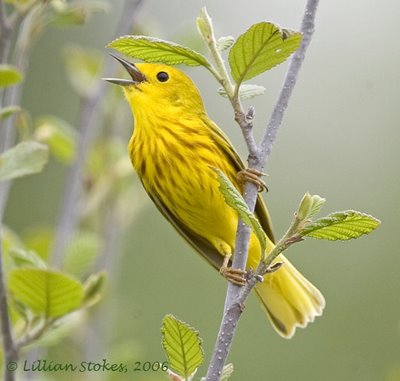
If you want to learn birds songs, such as the song of this Yellow Warbler, in a whole new super-fast way, get birdPod(birdJam). What is birdPod? birdPod (birdJam) is an ipod (Apple's digital music player) loaded with Stokes Field Guide to Bird Songs CDs, (which contain the songs and calls of almost all North American Birds), plus the birdPod (birdJam) software.

Of course, you can also load the Stokes Field Guide To Bird Songs CDs onto an ipod and listen to them without getting the birdpod (birdJam) software. The Stokes songs would appear the way they are on the Stokes Field Guide To Bird Songs CDs, where they are essentially organized by phylogenetic order such as, Seabirds, Heronlike Birds, etc. You would just scroll to the name of the bird you wanted and listen to its songs and calls. This works well when you know the name of the bird you want to listen to.

What the birdpod (birdJam) software does is use the bird songs on the Stokes CDs and organizes them into playlists that group birds by things such as habitat or family, for example, "urban birds" or "forest birds." This is useful for both the learning of birds songs and the identification of birds in the field, especially if you don't know what bird is making the sound. If you were in an urban habitat, you could go to the playlist of "urban birds" and listen to the sounds until you came to the sound you were trying to identify. The birdPod (birdJam) software removes the spoken bird name announcement at the beginning of each track (which you don't need, since the written name of the bird appears in the ipod window) and it splits double tracks into single tracks for fast access.

The birdPod (birdJam) company says, "birdpod combines the best bird sound collection available, Stokes Field Guide to Bird Songs, Eastern and Western Regions, with our birdPod software to create the ultimate bird song reference....in less than 15 seconds, you can find and listen to any of 650 species of North American Birds".

To access bird songs on the ipod, you just push the center white button then run your thumb or finger around the gray dial to quickly scroll up or down the bird lists. It just takes seconds to do this and is much faster than loading and unloading CDs in and out of a CD player and finding the right track. The ipod player is about the size of a deck of cards, shown above. You can listen through little ear phones or attach an external speaker, shown here, to broadcast the songs. You can even buy a device that lets you play your ipod through your car radio.


The blog, 10,000 Birds, had a review, calling it "Beautiful BirdPod.... birdPod is most assuredly both convenient and portable......The genius of the birdPod is not the iPod itself; that's Apple's masterwork of design. Nor have the manufacturers of the birdPod put together their own coast to coast compilation of bird calls. For that they turned to the highly regarded Stokes Field Guide to Bird Songs, Eastern and Western Region. ......the birdPod looks to be a very useful tool for any birder attempting to expand his or her repetoire of North American bird calls."

Birdpod (birdJam) can be purchased from the birdPod website store as 3 options:
1. The ipod already loaded with the birdPod (birdJam) software plus the Stokes Field Guide To Bird Songs CDs.
2. The birdpod (birdJam) software and the Stokes Field Guide To Bird Songs CDs, (because you already own an ipod).
3. The birdPod (birdJam) software alone, (because you already own an ipod and the Stokes Field Guide To Bird Songs CDs).

You can also buy the Stokes Field Guide To Bird Songs CDs by themselves from amazon.com and many other online retailers, and stores.

While writing this, we have been listening to our ipod play all the warbler songs — a great cheer up on a rainy New Hampshire day, and good practice for the coming warbler season. So get ready to increase your birding skills, learn bird songs on your iPod.
Saturday, April 22, 2006

Amphibians

Spring rains are spreading across much of the East today and tomorrow. 'Tis the time for many amphibians to emerge from their winter hiding places and migrate to vernal ponds to breed.
When the air temperature remains above 40 degrees and rain begins in the afternoon and goes through the evening, Spotted Salamanders migrate at nightfall to ponds to breed and lay eggs. Sometimes hundreds, or even thousands, migrate in the course of one night. Go out with raincoats, binoculars, and flashlights and look for them crossing roads, marching down hillsides, and at the edges of the ponds.

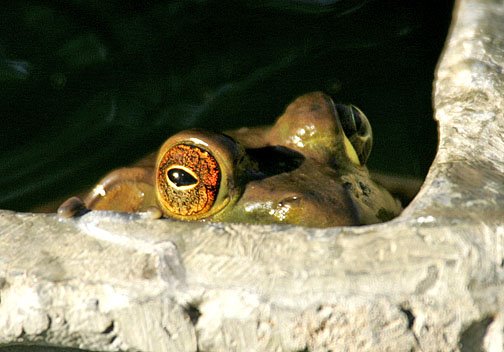
The Bullfrog, above, took up residence in our cistern fountain last summer. Bullfrogs are found in ponds, lakes, and reservoirs. They are active year round in the South and from March to November in the North. Listen for the male's "jug-o-rum" call. For complete information on these and other amphibians nationwide see Stokes Guide To Amphibians and Reptiles by Tomas F. Tyning.

Amphibians need vernal ponds and water areas protected for their continued survival. So think of them when you celebrate Earth Day today.

Friday, April 21, 2006

Savannah Sparrow

(click on photo to see a larger version of photo)

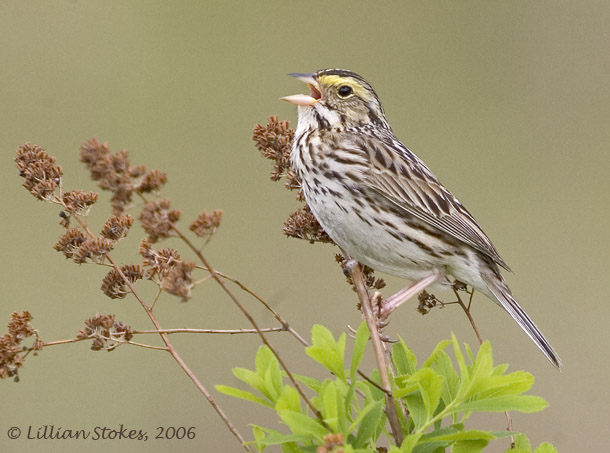
On our morning walk, we saw a bird flush up out of the large hayfield at our home, Bobolink Farm, and land in a shrub. It turned out to be a Savannah Sparrow, the first one we've seen this year. A beautiful sparrow, Savannah's have a pale, cream-colored breast with fine brown streaking, and distinctive yellow on the front part of their eyebrow.

This was an exciting moment for us. When we see a grassland species of bird choose our property, it means we have good habitat for that species. Our goal at Bobolink Farm is to maintain a diversity of habitat for many species of birds, especially grassland species. Grasslands and hayfields are actually rare habitats in New England, which is mostly heavily wooded. So — welcome, Savannah Sparrow.

Thursday, April 20, 2006

Here's Looking At You

Today an Osprey flew over the pond at Bobolink Farm and it was Wonderful! This was our first sping migrant Osprey. Hope it finds a good place to nest this year.

Tuesday, April 18, 2006

Bobcats and Dreams


Here is a bobcat of the four wheeled, not four pawed, kind, creating the new long border. The area behind the barn at our home, Bobolink Farm, used to be a horse corral and had 3 feet of sand as its base. To create flower beds that will be 40 feet long and 12 feet wide, we have to dig out 2 feet of the sand and replace it with loam and compost — a job for a bobcat, not us.
We dream of summer images of hummingbirds and butterlies that will be attracted to the new gardens.