Search This Blog

Thursday, November 16, 2006

Got Owls?

Got Owls? Kinda reminds me of the old milk commercial, "Got Milk?", where someone is eating a chocolate chip cookie, or the like, and desperately needs the perfect accompaniment — milk. Well our property list, impressive though it is (for inland NH), could really use some owls. You'd think our property would be loaded with owls. After all, we have large open fields that harbor voles, owls' favorite cuisine.

We have seen Barred Owls here, and, of all things, a Barn Owl, quite a rarity in these parts. One showed up in October on two separate years, and proceeded, each time, to call for about a week.

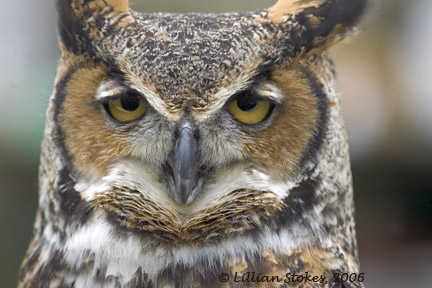
But what about Great Horned Owl, so ubiquitous elsewhere? How could we be missing that, we listen often at night? Or, how about a little Northern Saw-whet Owl? We know a friend across town has some in his woods. Or what about a Long-eared Owl? An acquaintance claims to have seen them in these parts, years ago.

So, while our list grows with interesting new birds, it still remains rather owl-less. We are hopeful.

Got Owls? If you do, please send them our way.

Photo © Lillian Stokes, 2006

Tuesday, November 14, 2006

#173!!


Some people keep all kinds of bird lists; life lists, country lists, state lists, county lists, year lists, birds you've seen on T.V. lists, birds you've seen while doing the backstroke in a swimming pool list, etc. Us? We keep a property list, that is, a list of birds we have seen from our property.

Granted, sometimes we stretch the limits of what we mean by "from our property". For example, we're out in the canoe and we see a bird that we claim we could have seen if we had been standing on our property, so we count it. By and large, though, it's birds we've seen while our toes are on, or inside, our property line.

We were thrilled a few days ago when a new "property bird" showed up for us. We were walking with the Corgi's and a bird flushed up from the ground in our big field and flew in a wide circle over our head. Our binos picked out the yellow and black facial pattern. Unmistakable! Right where it should be, in an open field, since it's habitat is open ground with low vegetation, where it eats weed seeds and insects.

So #173 on our propety list, is — Horned Lark. Sweet!

All photos © Lillian Stokes, 2006

Monday, November 13, 2006

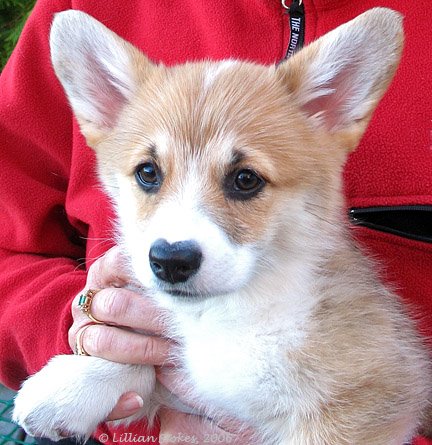
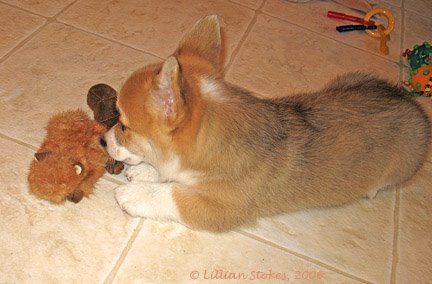
Phoebe

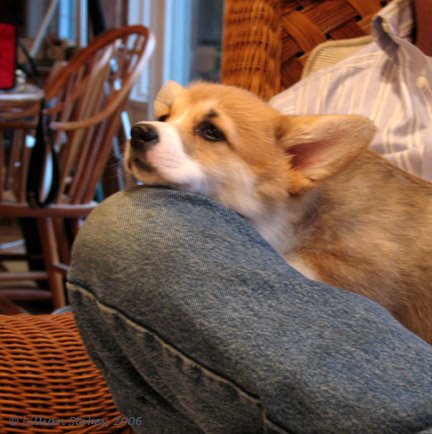
I took this image of our new puppy, Phoebe, with my 300 mm telephoto, as she was watching her sister and mother run around. One of the advantages of telephotos is that you can be a distance from the subject, whether it is a bird, or a puppy, and not distract them by your close presence. Phoebe sure is fun to photograph.

Sunday, November 12, 2006

Common Mergansers

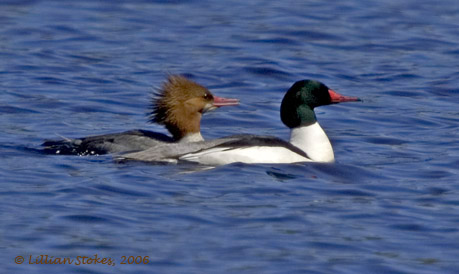
Common Mergansers, (female left, male right)

Recently we had a few, migrant Common Mergansers on our pond. These are such elegant ducks, with their long bodies and cruise-control attitude. The dramatic colors of the male stand out at a distance. His head is iridescent and usually looks dark, or may appear dark green when the sun reflects on it right. I love the female's jaunty, rufous crest. These are diving ducks who plunge down just when you're trying to find them, then bob up elsewhere, like a cork. They eat fish, crustaceans and mollusks. The Common Merganser is more apt to be found on fresh water during migration and winter, whereas, its similar appearing relative, the Red-breasted Merganser, is more likely to be found on salt water at those times.

Just when we have said good-bye to all the fall migrating warblers and shorebirds, we can greet the next wave of new faces — the ducks. It's one of the many things that keep birding interesting for us. See if you can find some migrant ducks on water areas near you.

Friday, November 10, 2006

Red Bat

We were walking with the dogs in our big field near dusk and glimpsed something red flying near the forest edge. Picking up our DLS twilight optimized binos (yes, they really do help us see better at dusk), we saw not a bird, but this incredible bat!! It was so beautiful as it swooped, flew and turned, and so red. Wow!
This was a Red Bat, who typically migrates to southern regions to winter. Made us wonder if we were seeing a migrant, or just one that was overwintering (a few may up north) and had emerged for an evening snack. The photo above I took last year on Oct. 31st. Sorry it's slightly blurry, but it's hard to photograph a bat in flight hand holding a camera. Could this be the same bat from last year? I feel so lucky to live in a place where I can see a Red Bat.

Photo © Lillian Stokes, 2006
Thursday, November 09, 2006

American Tree Sparrows

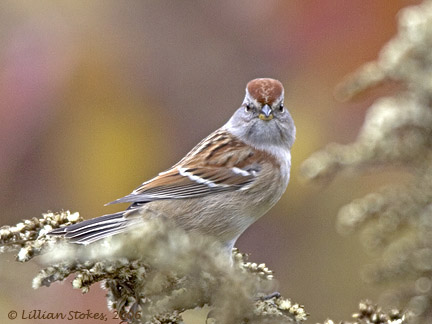
American Tree Sparrow with crest raised

American Tree Sparrow

We had a birder friend over a few days ago and we took a long walk across the fields at our home "Bobolink Farm". Just as we returned, we spotted some beautiful, little American Tree Sparrows in our birch trees, the first we had seen this season.

Sometimes mistaken for a Chipping Sparrow, these delicate birds have a rusty cap like a chipping does in its summer plumage, (in winter, the chipping has black streaking through the rusty cap). Tree Sparrows have a rufous eyeline, not blackish like a Chipping Sparrow, and their telltale, central breast spot stands out at a distance.

Just seeing them, with their soft, russet colors against the late fall landscape, gave me warm feeling, like greeting a friend you only see at a certain time each year. I also love their musical tinkling call, a teedle-eet note, which reminds me of tiny sleighbells and the approaching winter. These beautiful birds breed in the far northern reaches of the continent, but winter across much of the U.S. Enjoy then while they are here.

Wednesday, November 08, 2006

Rare Birds

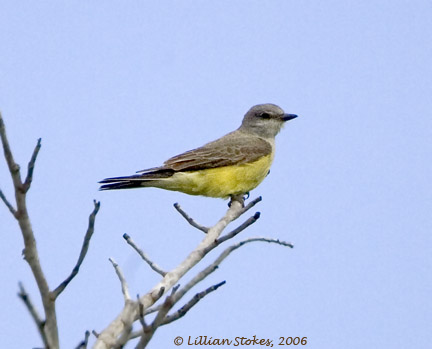
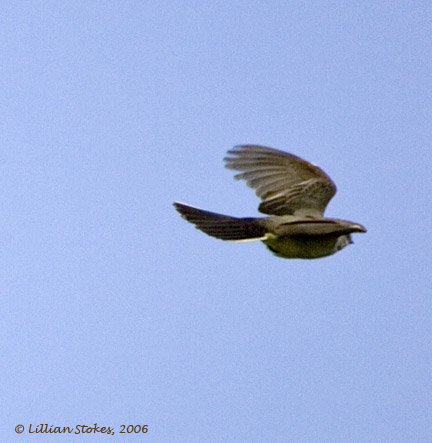
Western Kingbird

Western Kingbird flying, note white edge to tail, one of its field marks

Nothing quickens the pulse of a birder faster than the prospect of seeing a rare bird. But what is a rare bird? Sometimes a bird is rare because it's a habitat specialist, has suffered great habitat loss and its population has declined. Other times, as we used to joke, a rare bird can be the wrong bird, in the wrong place, at the wrong time. In other words, it's a bird that is unexpected in that area, not in its usual range, or there not at its usual time.

We once had a Western Kingbird show up on our property in NH in August. If you look in your field guide, you will see that the breeding range of a Western Kingbird is across the western part of the country where they are found in dry, open habitats. Infrequently they can been seen during fall migration on the east coast. For us in inland NH, this was a rare bird.

Right now there are many rare birds that can be seen in different areas of the country. In MA, a Gray Flycatcher (which breeds in the far western states) has been spotted. Another western species, a Say's Phoebe was just seen in Delaware. You can find what rare birds are being seen in your area by going to the birding list serves. There are sightings, directions to how to get to the rare bird, and often great photos. Even if you can't get there, you can still look at the photos and dream.

So why aren't we out looking at the Gray Flycatcher? Becase today we are busy minding three Corgis (our own puppy, Phoebe, and her mother and sister who are temporarily visiting), as well as writing a brand new national field guide for you (more on that later).

Monday, November 06, 2006

My Smart Puppy

Once upon a time, there was a very smart puppy.........

Phoebe, our new Corgi puppy is being read a great training book called, My Smart Puppy by premier dog training experts, Brian Kilcommons and Sarah Wilson. It's amazing, all we do is read the book to Phoebe and she immediately learns all the training.

Just joking! Training a new puppy is really all about training yourself to know what your puppy needs and how to communicate effectively what you want, as Brian and Sarah aptly point out. It is a rewarding and challenging activity and very necessary if you are to develop a well-trained canine companion who is a joy to live with. Phoebe is smart, and willing and it is up to us to bring out the best in her.

We really like this book and have learned a lot from it. It is chock full of great training methods that are fun, as well as solid coaching of you, the trainer. Some of our favorite wisdom from My Smart Puppy book:

"You Raise What You Praise"
"You Get What You Pet"

These are lessons in how important it is to reward the good behavior you want to encourage in your dog. This book even comes with a DVD to demonstrate the authors' techniques. Thanks Brian and Sarah!

Saturday, November 04, 2006

Robin Migration


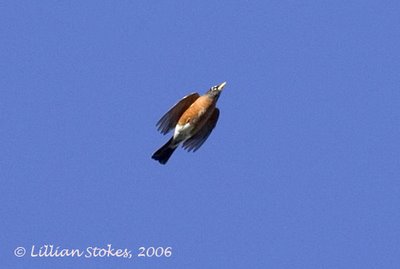
American Robins are now migrating through our property, Bobolink Farm, in large numbers. We love to watch them flying in the early morning when they're illuminated by the sun. They often stop on our property because we have so many berry producing shrubs here.

Robins can sometimes stay in more northern areas as long as there are berries available. People are often suprised to see them during the colder months. When berries diminish and extremely severe weather moves in they will go farther south. We go to Sanibel Island, FL in winter and have seen thousands of robins wintering there, often eating the fruits of the native palm trees.

We kinda hate to see them go because it means winter is coming to NH. But we know we will experience the thrill of seeing the first robin return in the spring.

Wednesday, November 01, 2006

Dark-eyed Junco

Dark-eyed Juncos are migrating through our property. Where we are in NH, some stay for the winter, but not as many as stayed at our home in MA, when we lived there. Many go much further south to winter. One of the things we find interesting about juncos, in addition to the fact they are called "snow birds" because of their 'dark skies above, snow below' coloring, is the fact they return to the same wintering areas each year. There, the flock stays in an area of about ten to twelve acres. They have very interesting flock behavior that you can look for at your bird feeder.

Not all juncos look like our one pictured above, called the "slate-colored form", which breeds in the eastern U.S. and Canada. In other areas of the country there are different forms. The "oregon junco" breeds in the western part of the country. The "gray-headed junco" breeds in the central Rocky Mountains. The "white-winged junco" breeds close to the Black Hills of South Dakota. The "pink-sided junco" breeds in the northern Rockies and the "red-backed junco" breeds in the Southwest. They are all, however, considered one species — the Dark-eyed Junco. Look for these engaging little birds at your feeders this winter.

Tuesday, October 31, 2006

Trick or Treat?

Phoebe, our new puppy, is our treat!

HAPPY HALLOWEEN!

Photo © Lillian Stokes, 2006
Sunday, October 29, 2006

Surf Scoters


Tried to post this to the blogger website, yesterday, where our blog is hosted, but I couldn't get through. Seems to be working today.
Rain storms and high winds are hitting New England. Some people might want to curl up with a good book indoors under such conditions, but this is exactly the time hardy birders head out to the coast to see what birds might get blown in towards shore with the storm.
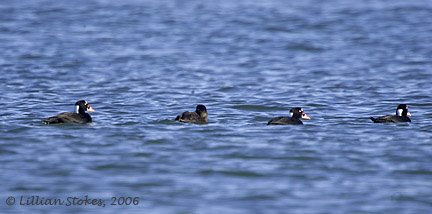
Large numbers of scoters migrate along both coasts and this would be a good time to see some. An acquaintance just told us he had seen thousands of Black Scoters from the MA coast. The above photos are of Surf Scoters, our favorite scoter, who can often be seen in mixed flocks with Black and White-winged Scoters. The male Surf Scoters have the striking black-and-white head pattern, (females have less distinct brown head with whitish patches) hence the male's nickname, "skunk scoter". Makes it easy to remember them.

Thursday, October 26, 2006

How Big?

How big is Phoebe, our new puppy?
This big.
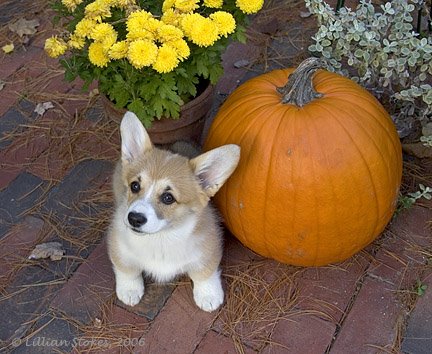
About as big as a medium size pumpkin. She is 12 weeks old today.
It is so amazing to have such a little being living with us. She is so little, we have to be careful not to step on her, especially since she follows us closely everywhere, a trait of the herding dog she is. But every day she is getting stronger, smarter and growing. It's fun to watch.

Tuesday, October 24, 2006

Audubon Society of Rhode Island


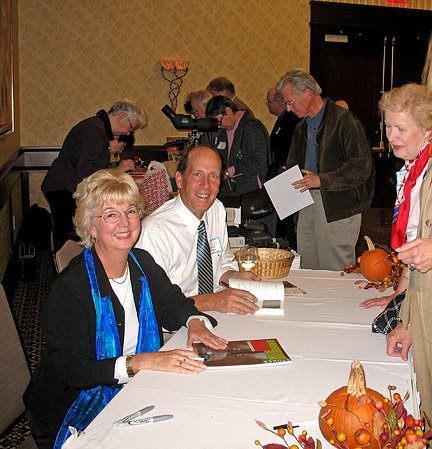
We just gave a talk at the Audubon Society of Rhode Island's annual meeting. What a nice bunch of folks they are, and working so hard to protect the environment. They gave out lots of awards and even had the two candidates running for Governor of Rhode Island speak to the gathering about their environmental policies.
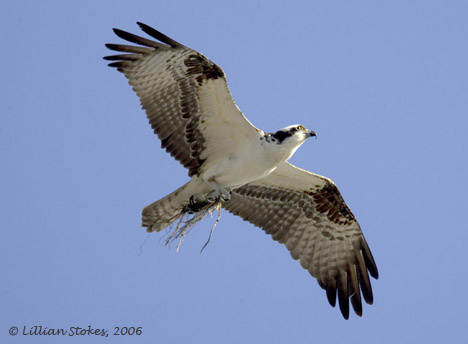
It was announced that Rhode Island will now have an Osprey license plate that people can buy and proceeds will go towards conservation.
We did a book signing as well and Stokes Birding Series binoculars were sold by the society. One couple, who each bought a pair of Stokes DLS binoculars, took our advice that we said in our talk.. "the secret to our marital harmony is...don't share a pair!!"

Friday, October 20, 2006

Ruby-crowned Kinglet & Phoebe


Yesterday we saw a lovely little Ruby-crowned Kinglet flitting through the fall foliage. These little birds give new meaning to the word "hyperactive" for they move so fast. They constantly flick their wings as they forage in the leaves. The ruby crown is rarely visible but I got a photo showing the little red patch partially exposed.


Speaking of fast moving little things, of course we had to add some photos of our new puppy, "Phoebe". You'll have to pardon us in the coming weeks if we post photos of her, we are totally ga-ga over this adorable pup. But we'll also keep the bird photos coming.

Gotta go give some talks, see you next week. Have a nice weekend. Go see some birds!

Tuesday, October 17, 2006

Welcome Phoebe! Happiness is a Warm Puppy


Remember when we said back here, after our beloved Corgi, Daisy, died, that we saw a sign that read "When one door of happiness closes, another opens. Often we spend so long looking at the door that has closed, we do not see the door that has opened." Well this beautiful new Corgi puppy that we just got is the door that has opened for us. We, of course, had to name her after a bird, and the name "Phoebe" seemed perfect. The day before we got her, an Eastern Phoebe (the bird) landed on our balcony right outside our bedroom window and stared in at us for a long time. We hadn't seen this species for quite some time, we thought they had migrated. We took it as a sign that puppy Phoebe coming to us, was meant to be.

After Daisy died, we began a search for a new Corgi and thought it would take a long time. By a great coincidence, a wonderful Corgi breeder had moved near us and had just had a litter of puppies. We were fortunate enough that the breeder allowed us to have this gorgeous puppy. Even though we still miss our Daisy, we have learned that we can fall in love, again, with another dog. Phoebe is not a replacement of Daisy, for she is a very different dog. She is an addition to our lives and we look forward to moving through the door that has opened and building a wonderful new relationship with Phoebe.

Friday, October 13, 2006

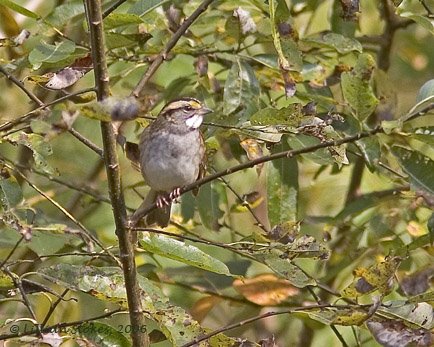
White-throated Sparrow

This morning, this White-throated Sparrow was in the willow shrub next to our feeders, its white throat gleaming, even though the rest of it was fairly camouglaged against the shrub. The sparrow migration is beginning. Lots more to come.

Wednesday, October 11, 2006

Common Yellowthroat

I needed a photo for our blog, so I went out to photograph some Palm Warblers I saw by our woodland edge. By the time I had gotten there, they had flown away and I had no luck. Just as I was about to leave, this lovely Common Yellowthroat female popped up and allowed me to photograph her. Photographic serendipity!

As the lyrics to the Rolling Stones song goes, "you can't always get what you want...but if you try sometime, you find, you get what you need."

Photo © Lillian Stokes, 2006

Monday, October 09, 2006

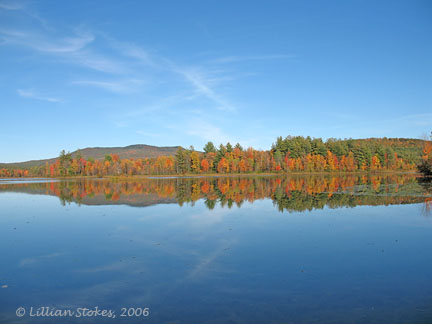
Fall Canoe Ride


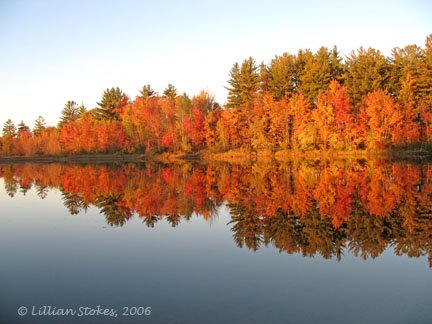
We are at peak foliage color here at our home, "Bobolink Farm", in southern NH. The mountain that we look at is ablaze with vivid colors. It's magical to take a canoe and go out on the pond and paddle into the reflections of the trees. We were surrounded by the reflections that look like molten gold on the water. We treasured the moment and wanted to share it with you.

Saturday, October 07, 2006

Birding Cape May, NJ, continued

Osprey

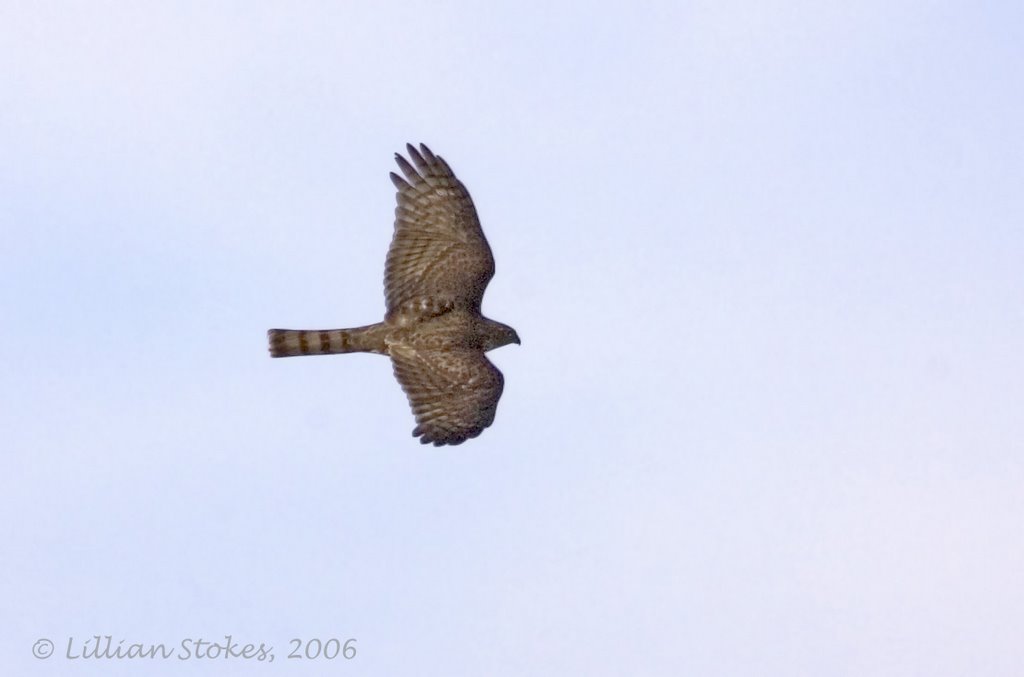
Sharp-shinned Hawk pursuing a...

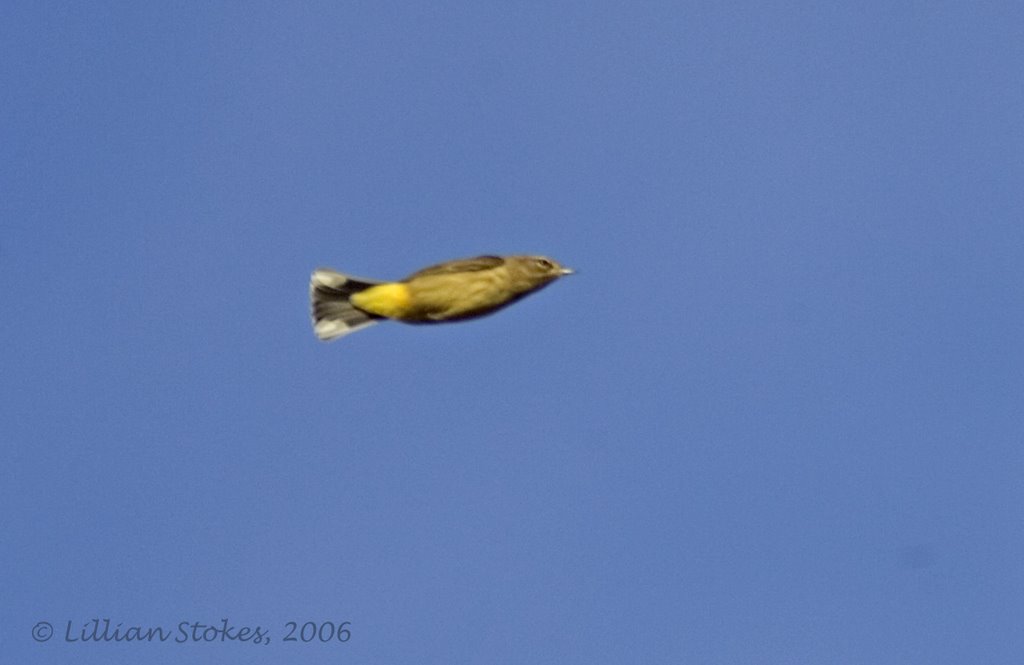
Palm Warbler in flight

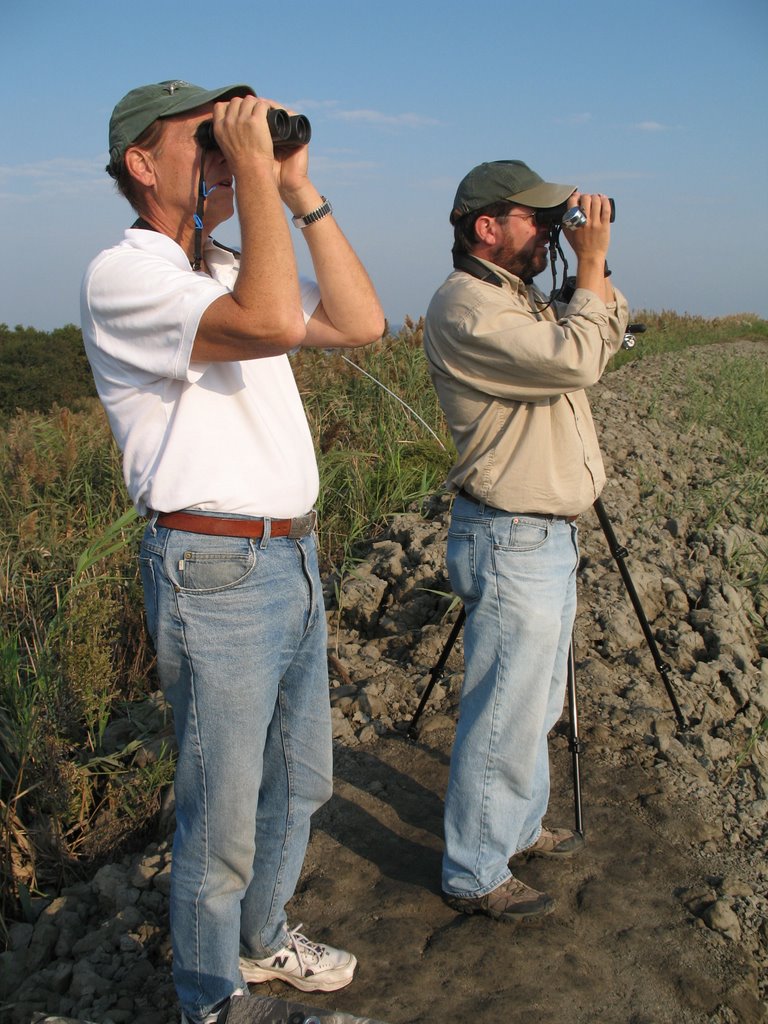
Don and Michael O'Brien at Higbee Beach

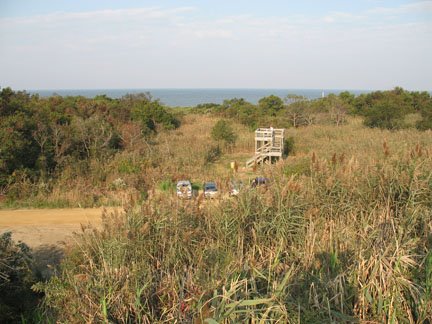
Higbee Beach "morning flight" platform

Mute Swan

Canada Geese

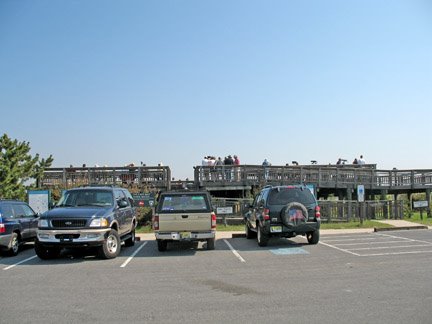
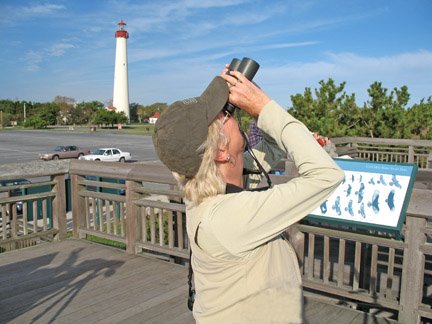
Cape May Hawk Watch platform

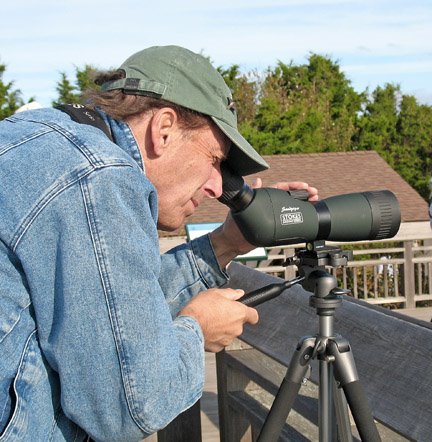
Don with Stokes Birding Series "Sandpiper" spotting scope

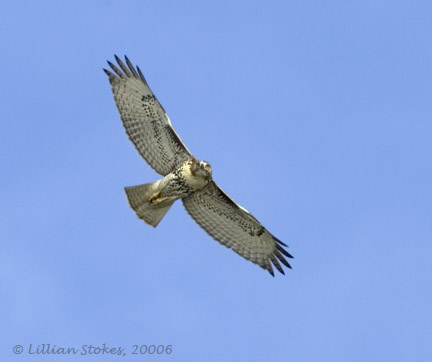
Red-tailed Hawk (immature)

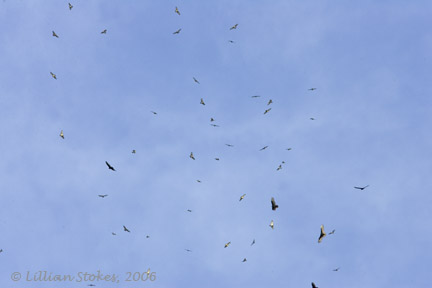
A "kettle" of Broad-winged Hawks and Turkey Vultures

Lillian watching the "kettle" of hawks

Monarch Butterfly flying past Cape May Lighthouse

Monarch Butterfly in flight

Black Saddlebags Dragonfly

Here are more images from our recent trip to the premier birding hotspot, Cape May, NJ, which has many places to watch birds. In the morning, we went to Higbee Beach platform, a traditional place birders start the day, because there is a "morning flight" of songbirds where you might see hundreds of warblers flying by at warp speed, a real ID challenge. In hot pursuit are the many Sharp-shinned and Cooper's Hawks. Don is standing on the ridge next to the platform with Michael O'Brien, co-author, along with Richard Crossley and Kevin Karlson, of the excellent new book "The Shorebird Guide". Michael is keeping the official count of the birds flying by.

Our next stop was the Cape May Hawk Watch platform where there is a constant stream of hawks overhead. In the water area in front of it, there are many other birds, such as Mute Swans, Canada Geese, herons and shorebirds.

In addition to birds there were an incredible number of Monarch Butterflies passing by. There are also migrating dragonflies, such as the above Black Saddlesbags.

So if you want to see and have the opportunity to learn lots of birds, plan your next birding trip to the incredible Cape May, maybe we'll see you there!