Search This Blog

Showing posts with label Monarch Butterfly. Show all posts

Thursday, July 21, 2016

Butterflies for Birders!


Monarch Butterfly. They lay their eggs on milkweed and their caterpillars feed on this plant.


Great Spangled Frittillary on Purple Coneflower


Close-up of Great Spangled Fritillary

American Lady Butterfly, told by the two eye spots on underside of the hindwing

Tiger Swallowtail Butterflies are unmistakable

Spicebush Swallowtails can be told from other big, dark swallowtails by their single row of prominent white dots inside the margin of their forewings.
The larvae of Spicebush Swallowtails feed on spicebush and sassafrass.


Pearl Crescent butterfly. Scores are feeding on white clover on our path so we keep the path mowed high to preserve the clover flowers for them.

Mourning Cloaks are widespread across much of North America. They are one of the few butterflies who overwinter as adults, finding protected places in log piles, nooks, or under loose bark, and when they emerge in the spring they look worn, as this butterfly does. They are one of the longest lived butterflies and some may live as long as 10 months. Mourning Cloaks feed on sap and fruit.


Our butterfly bushes will bloom soon and they're magnets for the butterflies. Here's a Great Spangled Fritillary butterfly on one of them.


We've written two books to help you attract and identify butterflies.Stokes Beginner's Guide To Butterflies, has an easy ID key to help you quickly identify the butterflies you see by size and shape.


Stokes Butterfly Book gives you plans for a butterfly garden, lists and photos of butterfly plants, and chapters, with color photos, on the identification, behavior and caterpillars of common butterflies. Both are available at amazon.com and stores.


When the birding is slow, and it's the middle of the day, a wonderful thing for birders to do is look for butterflies. Butterflies are colorful flying creatures, just like birds. The identification skills birders already have can be transferred to identifying butterflies.
Look at butterflies through your binoculars, no need to catch them in a net.

The hot weather favors butterflies as they need to warm their bodies to fly. They need to get their body temperature up to 85 to 100 degrees Farenheit in order to fly well. Adult butterflies come to flowers for nectar, lay their eggs on special host plants, which can be unique to each species of butterfly. The eggs hatch, larva feed on the plant then turn into a pupa or crysalis from which the adult butterfly will emerge. A complete cycle or generation is called a brood, and butterfly species can go through from just one to as many as four broods per year, depending on the species and the number of warm months. Different butterflies are on the wing at different times during the summer, so you will continue to see new species.

There are about 17,000 species of butterflies in the world. In North America there are about 700 species but only a small fraction are common and likely to be seen by the average person.

When you see a butterfly watch it closely for several minutes. Observe how it flies, its size, shape, and the colors and patterns on its wings, both above and below.

Start by knowing the major families of butterflies that are distinctive. Below are some:

Swallowtails - are our largest butterflies and most have long tails coming off their hind wings.

Whites and Sulfurs - these are all medium-sized butterflies that are predominantly white or yellow.

Gossamer Wings - this group is easy to identify since it includes all of our smallest butterflies, such as the blues, coppers and hairstreaks, and metalmarks. The blues tend to be iridescent blue, coppers are often copper, hairstreaks often have hairlike tails on their hind wings, and metalmarks often have metallic spots on their wings.

Brush-footed Butterflies - this is a large and varied group of medium-sized, generally dark-colored butterflies with such strong and rapid flight they are hard to follow. Their is no one field characteristic, besides their flight, that makes them easy to identify as a group.

Satyrs - these are medium-sized butterflies that are almost all brown, often with darker eye-spots on their wings. They have a weak and bobbing flight and are often seen at woods edges or among grasses.

Skippers - are small butterflies whose flight is extremely rapid and erratic. They are mostly rich brown or orange-brown

Enjoy the butterflies as well as the birds!

Friday, June 19, 2015

Butterfly Identification made easy! Learn your butterflies!

Monarch Butterfly. They lay their eggs on milkweed and their caterpillars feed on this plant.


Great Spangled Frittillary on Purple Coneflower


Close-up of Great Spangled Fritillary

American Lady Butterfly, told by the two eye spots on underside of the hindwing

Tiger Swallowtail Butterflies are unmistakable

Spicebush Swallowtails can be told from other big, dark swallowtails by their single row of prominent white dots inside the margin of their forewings. The larvae of Spicebush Swallowtails feed on spicebush and sassafrass.


Pearl Crescent butterfly. Scores are feeding on white clover on our path so we keep the path mowed high to preserve the clover flowers for them.

Mourning Cloaks are widespread across much of North America. They are one of the few butterflies who overwinter as adults, finding protected places in log piles, nooks, or under loose bark, and when they emerge in the spring they look worn, as this butterfly does. They are one of the longest lived butterflies and some may live as long as 10 months. Mourning Cloaks feed on sap and fruit.

Our butterfly bushes will bloom soon and they're magnets for the butterflies. Check with your local nature society to see which butterfly plants are not invasive in your area. Here's a Great Spangled Fritillary butterfly on butterfly bush.


We've written two books to help you attract and identify butterflies. Stokes Beginner's Guide To Butterflies, has an easy ID key to help you quickly identify the butterflies you see by size and shape.


Stokes Butterfly Book gives you plans for a butterfly garden, lists and photos of butterfly plants, and chapters, with color photos, on the identification, behavior and caterpillars of common butterflies. Both are available at amazon.com and stores.


When the birding is slow, and it's the middle of the day, a wonderful thing for birders to do is look for butterflies. Butterflies are colorful flying creatures, just like birds. The identification skills birders already have can be transferred to identifying butterflies.
Look at butterflies through your binoculars, no need to catch them in a net.

The hot weather favors butterflies as they need to warm their bodies to fly. They need to get their body temperature up to 85 to 100 degrees Farenheit in order to fly well. Adult butterflies come to flowers for nectar, lay their eggs on special host plants, which can be unique to each species of butterfly. The eggs hatch, larva feed on the plant then turn into a pupa or crysalis from which the adult butterfly will emerge. A complete cycle or generation is called a brood, and butterfly species can go through from just one to as many as four broods per year, depending on the species and the number of warm months. Different butterflies are on the wing at different times during the summer, so you will continue to see new species.

There are about 17,000 species of butterflies in the world. In North America there are about 700 species but only a small fraction are common and likely to be seen by the average person.

When you see a butterfly watch it closely for several minutes. Observe how it flies, its size, shape, and the colors and patterns on its wings, both above and below.

Start by knowing the major families of butterflies that are distinctive. Below are some:

Swallowtails - are our largest butterflies and most have long tails coming off their hind wings.

Whites and Sulfurs - these are all medium-sized butterflies that are predominantly white or yellow.

Gossamer Wings - this group is easy to identify since it includes all of our smallest butterflies, such as the blues, coppers and hairstreaks, and metalmarks. The blues tend to be iridescent blue, coppers are often copper, hairstreaks often have hairlike tails on their hind wings, and metalmarks often have metallic spots on their wings.

Brush-footed Butterflies - this is a large and varied group of medium-sized, generally dark-colored butterflies with such strong and rapid flight they are hard to follow. Their is no one field characteristic, besides their flight, that makes them easy to identify as a group.

Satyrs - these are medium-sized butterflies that are almost all brown, often with darker eye-spots on their wings. They have a weak and bobbing flight and are often seen at woods edges or among grasses.

Skippers - are small butterflies whose flight is extremely rapid and erratic. They are mostly rich brown or orange-brown.

Saturday, September 27, 2014

Are Monarch Butterflies in Trouble? There's Some Hope!


This year we are seeing more Monarch Butterflies stop by our garden, where last year we only saw two. Even though Monarch Butterfly populations are in deep trouble, having declined for the last 10 years, people are seeing more this year, but nowhere near as many as in the past. Monarchs still need substantial help if their populations are to be sustained in the long run. Most of their decline is due to habitat loss and loss of milkweed, which they need to lay their eggs on and their caterpillars eat. 
Plans need to be implemented to offset the loss of milkweed due to development and increasing croplands and milkweed needs to be maintained and more planted along migration routes. In your own yard you can plant flowers migrating monarchs nectar on. You can also help protect milkweed areas in your yard and local conservation areas. 

Go to this excellent website for much more info.

MonarchWatch.org 

In early Sept. they reported,

Reports from throughout the breeding range indicate an increase in monarch numbers roughly along the lines projected in May. The migration is already underway having started at 50 N around the 12th of August. The leading edge should be in southern MN at this time and in Ames, IA around the 6th of Sept. Fall roosts have been reported to Journey North in the Dakotas, MN, WI, MI and NY as of 28 August. No roosts had been recorded by the 29th of August last year (see Monarch Roosts Fall 2013 and Monarch Roosts Fall 2014). There will surely be more monarchs to tag over the next two months and the overwintering population in Mexico is certain to be larger. At a minimum, I expect the population to be twice as large as last year or roughly 1.4 hectares but it could be twice that size. We still have to hear about monarchs from many areas and the conditions during the migration will likely determine how many of the migrants reach the overwintering sites. It will help to watch the reports of overnight clusters recorded by Journey North and to watch the weather conditions and note the availability of nectar sources as monarchs migrate through the United States and northern Mexico.


Monday, July 21, 2014

Butterflies for Birders! When the birding slows down look for butterflies!

Monarch Butterfly. They lay their eggs on milkweed and their caterpillars feed on this plant.


Great Spangled Frittillary on Purple Coneflower


Close-up of Great Spangled Fritillary

American Lady Butterfly, told by the two eye spots on underside of the hindwing

Tiger Swallowtail Butterflies are unmistakable

Spicebush Swallowtails can be told from other big, dark swallowtails by their single row of prominent white dots inside the margin of their forewings. The larvae of Spicebush Swallowtails feed on spicebush and sassafrass.


Pearl Crescent butterfly. Scores are feeding on white clover on our path so we keep the path mowed high to preserve the clover flowers for them.

Mourning Cloaks are widespread across much of North America. They are one of the few butterflies who overwinter as adults, finding protected places in log piles, nooks, or under loose bark, and when they emerge in the spring they look worn, as this butterfly does. They are one of the longest lived butterflies and some may live as long as 10 months. Mourning Cloaks feed on sap and fruit.

Our butterfly bushes will bloom soon and they're magnets for the butterflies. Here's a Great Spangled Fritillary butterfly on one of them.


We've written two books to help you attract and identify butterflies. Stokes Beginner's Guide To Butterflies, has an easy ID key to help you quickly identify the butterflies you see by size and shape.


Stokes Butterfly Book gives you plans for a butterfly garden, lists and photos of butterfly plants, and chapters, with color photos, on the identification, behavior and caterpillars of common butterflies. Both are available at amazon.com and stores.


When the birding is slow, and it's the middle of the day, a wonderful thing for birders to do is look for butterflies. Butterflies are colorful flying creatures, just like birds. The identification skills birders already have can be transferred to identifying butterflies.
Look at butterflies through your binoculars, no need to catch them in a net.

The hot weather favors butterflies as they need to warm their bodies to fly. They need to get their body temperature up to 85 to 100 degrees Farenheit in order to fly well. Adult butterflies come to flowers for nectar, lay their eggs on special host plants, which can be unique to each species of butterfly. The eggs hatch, larva feed on the plant then turn into a pupa or crysalis from which the adult butterfly will emerge. A complete cycle or generation is called a brood, and butterfly species can go through from just one to as many as four broods per year, depending on the species and the number of warm months. Different butterflies are on the wing at different times during the summer, so you will continue to see new species.

There are about 17,000 species of butterflies in the world. In North America there are about 700 species but only a small fraction are common and likely to be seen by the average person.

When you see a butterfly watch it closely for several minutes. Observe how it flies, its size, shape, and the colors and patterns on its wings, both above and below.

Start by knowing the major families of butterflies that are distinctive. Below are some:

Swallowtails - are our largest butterflies and most have long tails coming off their hind wings.

Whites and Sulfurs - these are all medium-sized butterflies that are predominantly white or yellow.

Gossamer Wings - this group is easy to identify since it includes all of our smallest butterflies, such as the blues, coppers and hairstreaks, and metalmarks. The blues tend to be iridescent blue, coppers are often copper, hairstreaks often have hairlike tails on their hind wings, and metalmarks often have metallic spots on their wings.

Brush-footed Butterflies - this is a large and varied group of medium-sized, generally dark-colored butterflies with such strong and rapid flight they are hard to follow. Their is no one field characteristic, besides their flight, that makes them easy to identify as a group.

Satyrs - these are medium-sized butterflies that are almost all brown, often with darker eye-spots on their wings. They have a weak and bobbing flight and are often seen at woods edges or among grasses.

Skippers - are small butterflies whose flight is extremely rapid and erratic. They are mostly rich brown or orange-brown.

Thursday, October 03, 2013

Monarch Butterfly Population Crash

Monarch Butterfly populations are dropping rapidly. This one was in my garden just now.

This was a second Monarch, near the first, nectaring on Verbena bonariensis. You can see this one has worn or damaged wing tips.

Just photographed these Monarch Butterflies in my garden. They have become rare as hen's teeth here in NH with reports of population crashes in many other places in the country as well. There were two in the garden just now and they were nectaring on Verbena bonariensis, which I plant a lot of just for the butterflies.
Some think the population drop is due to a loss of milkweed, their larval host plant. That is the only plant on which they lay their eggs and their caterpillars eat the milkweed then pupate and turn into the adult butterfly. Milkweed has gotten wiped out in the midwest due to pesticides as well as drought last summer. Monarchs go to Mexico to overwinter in a few mountain pine forests and those places are also under threat from logging.
So sad to think their populations are plummeting, not sure what the future holds for them. But also so special to have two in my garden today. Safe journey.

Monday, June 25, 2012

Butterflies for Birders!


When the birding slows down look for butterflies! Here's a Monarch Butterfly. They lay their eggs on milkweed and their caterpillars feed on this plant.

Great Spangled Frittillary on Purple Coneflower

Close-up of Great Spangled Fritillary

American Lady Butterfly, told by the two eye spots on underside of the hindwing

Tiger Swallowtail Butterflies are unmistakable

Spicebush Swallowtails can be told from other big, dark swallowtails by their single row of prominent white dots inside the margin of their forewings.
The larvae of Spicebush Swallowtails feed on spicebush and sassafrass.

Pearl Crescent butterfly. Scores are feeding on white clover on our path so we keep the path mowed high to preserve the clover flowers for them.

Mourning Cloaks are widespread across much of North America. They are one of the few butterflies who overwinter as adults, finding protected places in log piles, nooks, or under loose bark, and when they emerge in the spring they look worn, as this butterfly does. They are one of the longest lived butterflies and some may live as long as 10 months. Mourning Cloaks feed on sap and fruit.
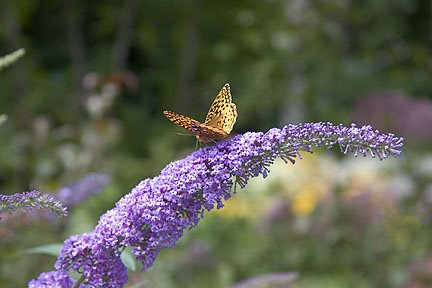
Our butterfly bushes will bloom soon and they're magnets for the butterflies. Here's a Great Spangled Fritillary butterfly on one of them.

We've written two books to help you attract and identify butterflies.Stokes Beginner's Guide To Butterflies, has an easy ID key to help you quickly identify the butterflies you see by size and shape.


Stokes Butterfly Book gives you plans for a butterfly garden, lists and photos of butterfly plants, and chapters, with color photos, on the identification, behavior and caterpillars of common butterflies. Both are available at amazon.com and stores.

In the middle of the day, when birds become less active, a wonderful thing for birders to do is look for butterflies. Butterflies are colorful flying creatures, just like birds. The identification skills birders already have can be transferred to identifying butterflies. Look at butterflies through your binoculars, no need to catch them in a net.

The hot weather favors butterflies as they need to warm their bodies to fly. They need to get their body temperature up to 85 to 100 degrees Farenheit in order to fly well. Adult butterflies come to flowers for nectar, lay their eggs on special host plants, which can be unique to each species of butterfly. The eggs hatch, larva feed on the plant then turn into a pupa or crysalis from which the adult butterfly will emerge. A complete cycle or generation is called a brood, and butterfly species can go through from just one to as many as four broods per year, depending on the species and the number of warm months. Different butterflies are on the wing at different times during the summer, so you will continue to see new species.

There are about 17,000 species of butterflies in the world. In North America there are about 700 species but only a small fraction are common and likely to be seen by the average person.

When you see a butterfly watch it closely for several minutes. Observe how it flies, its size, shape, and the colors and patterns on its wings, both above and below.

Start by knowing the major families of butterflies that are distinctive. Below are some:

Swallowtails - are our largest butterflies and most have long tails coming off their hind wings.

Whites and Sulfurs - these are all medium-sized butterflies that are predominantly white or yellow.

Gossamer Wings - this group is easy to identify since it includes all of our smallest butterflies, such as the blues, coppers and hairstreaks, and metalmarks. The blues tend to be iridescent blue, coppers are often copper, hairstreaks often have hairlike tails on their hind wings, and metalmarks often have metallic spots on their wings.

Brush-footed Butterflies - this is a large and varied group of medium-sized, generally dark-colored butterflies with such strong and rapid flight they are hard to follow. Their is no one field characteristic, besides their flight, that makes them easy to identify as a group.

Satyrs - these are medium-sized butterflies that are almost all brown, often with darker eye-spots on their wings. They have a weak and bobbing flight and are often seen at woods edges or among grasses.

Skippers - are small butterflies whose flight is extremely rapid and erratic. They are mostly rich brown or orange-brown.

Enjoy the butterflies!