Canada Geese flying overhead this morning on their way to the newly opened water. Spring is coming.
Search This Blog
Monday, February 24, 2020
Sunday, February 23, 2020
Corgis watching
The Corgis watching from the snow cleared deck. Abby, Andre in middle, Phoebe right. Always keeping track. Pileated Woodpecker is drumming in distance.
Friday, February 14, 2020
Wednesday, February 05, 2020
Gary Cole, Goodbye.
Gary and Don waiting at Blind Pass for the green flash.
Diane and Gary
Blind Pass sunset, Goodbye Gary.
Gary Cole, our good friend, passed away Monday, Feb. 3rd at his home in Illinois. Gary was generous and funny and passionate about bird photography, native plants, prairie restoration, conservation and of course, his grandkids! He was my photography buddy on Sanibel and we had many wonderful times with he and his wife, Diane Elizabeth Bell Cole there. Gary led many plant walks on Sanibel for the Weeds and Seeds group. Here are some of his bird photographs he last posted on his facebook page. He was sometimes shy about showing his photos, but I don't think he would mind me posting these. Gary was one of the good guys. We will miss him very much. In my photo of he and Don and the sunset they are waiting at Blind Pass for the Green Flash. My heart goes out to Diane and her family. Love you Gary, goodbye.
Monday, February 03, 2020
Bluebird Happiness!
Bluebird time! Yesterday our pair of Eastern Bluebirds were checking out their nesting box, going in and out, thinking about the upcoming breeding season. Happiness is bluebirds!
Sunday, February 02, 2020
Happy Groundhog Day! Early Spring Predicted!
Happy Groundhog Day! It's official, Punxsutawney Phil, the famous predicting groundhog, did not see his shadow so we will have an early spring. Where I am in eastern MA it is overcast so any groundhog who emerged would not see it's shadow, however all groundhogs here are still hibernating in their burrows despite the spring-like weather here (no snow on ground, mild temps). What's the weather where you are?
https://weather.com/…/2020-01-30-groundhog-day-punxsutawney…
Saturday, January 25, 2020
Great White Pelican, Here We Go Again!
Great White Pelican, Sanibel, FL 2016, ©Lillian Stokes
Great White Pelican, Sanibel, FL 2016 ©Lillian Stokes
Great White Pelican, Merritt Island, FL 2020 ©Kristina Fisher
Here we go again! A Great White Pelican (a species found in Africa, Asia and Europe) showed up Thursday at Merritt Island, FL. Experts are trying to determine if this is the same Great White Pelican that showed up at Ding Darling National Wildlife Refuge, Sanibel FL in Feb. 2016, 2017 and 2019. The Sanibel sightings were rejected by the Florida Ornithological Society as a first North American record even though there was no evidence that this was a bird escaped from captivity in the U.S. Experts keep track of that plus this bird had no bands. Will this open the case again? Amazingly this new sighting, as with previous sightings, had the Great White Pelican showing up the same month, February, in the company of American White Pelicans. The photo on top I took at Ding Darling in Feb. 2016, the photo on bottom was taken by Kristina Fisher Thursday at Merritt Island. Stay tuned. To see my blog post on the Sanibel bird go,
Tuesday, January 07, 2020
Short-eared Owl, Wonderful Winter Owl!
Thinking about winter owls. Here's a Short-eared Owl I saw several years ago in Salisbury Beach, MA on Christmas day. What a gift! This wonderful owls breeds across all of Canada and AK and the uppermost part of the West, but winters across most of the U.S. in grasslands and open areas where they hunt voles and mice.
Sunday, January 05, 2020
Happy National Bird Day!
Happy National Bird Day! Celebrate birds, protect birds, go birding, feed birds and most of all enjoy birds! I chose to show this Hairy Woodpecker at a feeder because that is the way the majority of Americans interact with birds.
Saturday, January 04, 2020
Purple Sandpiper, winters in New England
Sweet Purple Sandpipers are a wintering sandpiper here in New England. They breed in the tundra and winter on the rocky Atlantic Coast. Some may migrate through Greenland and winter in Europe. Not very purple but beautiful to see against the ocean landscape.
Wednesday, January 01, 2020
Carolina Wren First Bird of 2020, What's Yours?
Carolina Wren was my first bird of 2020. Sign of the times and the warming climate as this species has been moving its range northward, also helped by bird feeders. What was your first bird of 2020?
Tuesday, December 31, 2019
Our Christmas Bird Count 2019
Don looking for the Tree Sparrow
Eastern Towhee
Cooper's Hawk
Belted Kingfisher
Northern Mockingbird
Can you find the mockingbird?
Dawn
Tuesday, December 24, 2019
Thursday, December 19, 2019
How to Help Bluebirds Survive Winter!
We have recently seen Eastern Bluebirds checking out some of their nesting boxes from this past breeding season. They even grab a snack of the dried mealworms if you offer it. They usually move on when the weather gets really bad.

Bluebirds may sometimes remain in some northern areas in winter, much to people's surprise. Here's some tips for bluebird enthusiasts, on how to help bluebirds survive in winter.
1. Bluebirds can roost together in bird houses to keep warm. Insulate your bird houses in winter by closing off all cracks, drainage holes, etc., with some sort of insulating material so less drafts and cold get into the bird house (open these in spring). Just always leave the entrance hole open. Face bird houses away from prevailing winter winds.
2. Bluebirds mainly eat fruit and berries in winter. Plant your property with an abundance of crabapples and native, berry-producing shrubs such as viburnums and hollies (like winterberry holly). Place these berry plantings in sunny, protected areas, blocked from winter winds. The bluebirds will have a warm place to eat and use less precious energy.
3. Some bluebirds will come to food such as, hulled sunflower, suet, dried mealworms, and some of the many "bluebird meal mixtures" or nuggets. Generally most bluebirds do not learn to do this. You can certainly try putting out these foods, but your best bet is to have lots of berries planted in your yard.
4. Bluebirds like water (may help with processing the berries) and will visit bird baths and heated bird baths. In general, when it is very severely cold, some people think it is a risk for birds to bathe. Holding off on the water, or placing sticks over the bird bath to only allow birds to drink, not bathe, may be a good idea in this situation. Many birds will eat snow in winter to get water.
Most bluebirds move out of the northernmost areas of their range in winter. Even ones that may linger eventually move on, once their berry sources are depleted or ice-covered. For bluebirds, and many birds, there is a trade-off of staying more north in order to be first to claim prime breeding territories, yet risking survival due to bad weather. Some of these tips may help them survive and you feel you're helping them. Bluebirds are truly beloved.
For more complete information see Stokes Bluebird Book.
Tuesday, December 17, 2019
Blue Jay and Cardinal Beautiful!
Such beautiful birds in the snow! Cardinal like a flame and soft blue beauty of the jay.
Makes winter wonderful!
Wednesday, November 27, 2019
Happy Thanksgiving!
Happy Thanksgiving! This is a good year for Wild Turkeys in NH, we have seen lots. And there is a bumper crop of one of their favorite foods, acorns!
Friday, November 22, 2019
Palm Warbler still in NH
Palm Warbler, NH, fall
Palm Warbler, FL, winter
Warblers are gone from NH, just a few lingering ones have been seen, such as a Palm Warbler. Will have to wait until next spring to see them again. However, if you live in the Southeast or Gulf Coast states you may have wintering Palm Warblers and one subspecies of Palm Warbler is resident in central to south Florida. See our The Stokes Field Guide to the Birds of North America for complete photos and subspecies information.
Tuesday, November 19, 2019
Common Mergansers Migrating Now!
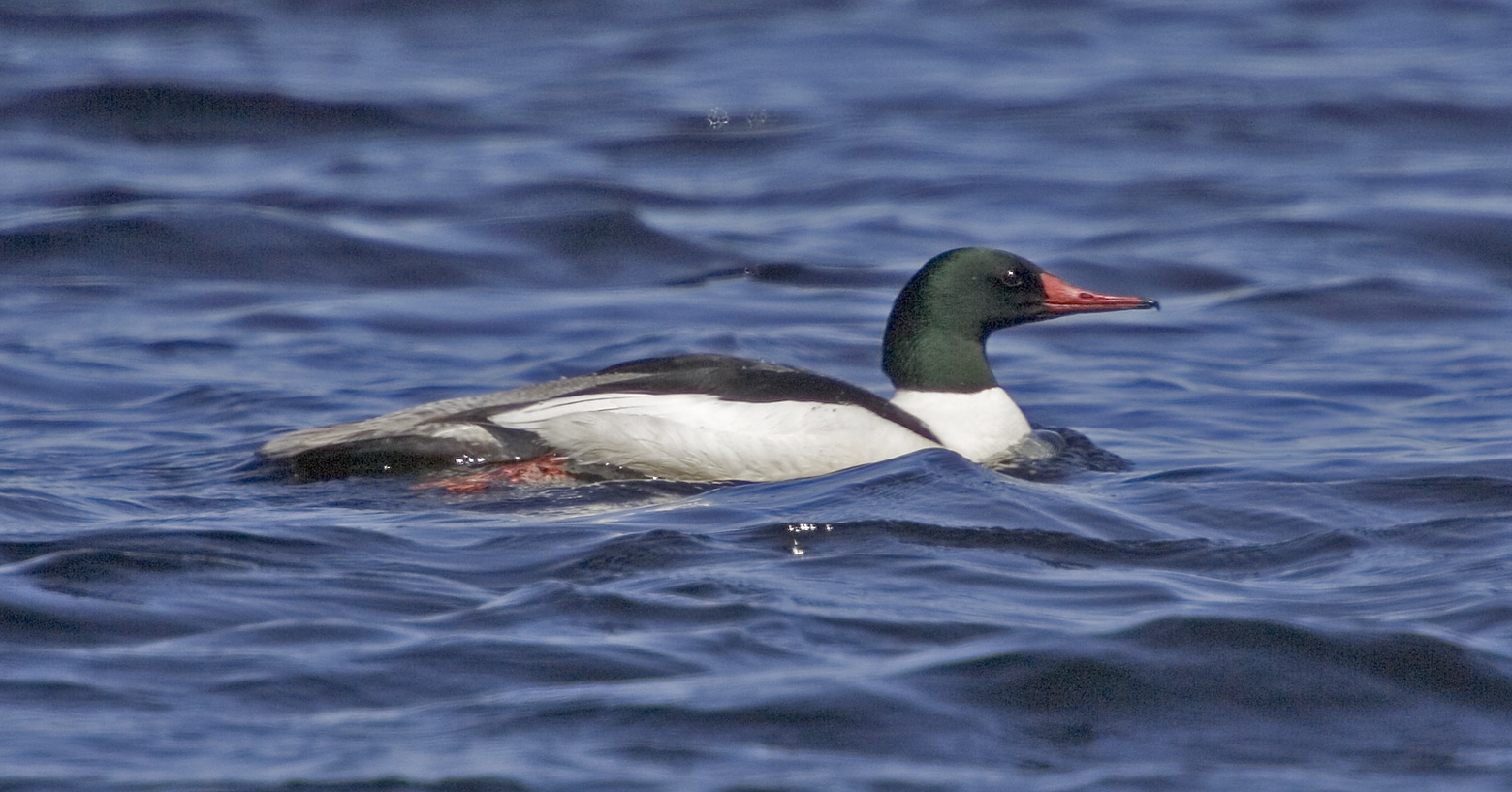
Common Merganser, male
Common Merganser, female
Migrating now through NH, Common Mergansers (male above, female below). They will winter across some of the eastern, middle and western areas of the country where there is open water, preferring freshwater large lakes, rivers and estuaries. Look for them near you.
Thursday, November 07, 2019
White-throated Sparrows come in two flavors!
White-throated Sparrow, white morph
Tan morph
White-throated Sparrows are migrating too! Love their "Oh-sweet-Canada-Canada" or "Old-Sam-Peabody-Peabody" song (depending on where you are from!). They come in two color morphs, with variations. The white morph has a white eyebrow and central crown-stripe and black in lateral crown-stripe. The tan morph has a buffy eyebrow and central crown-strip and more brown in lateral crown-stripe. All have a yellow supraloral dot. In general the older male white morphs have the brightest most contrasting plumage. Look for them at your feeders.
Wednesday, November 06, 2019
Hooded Mergansers are Migrating!
Hooded Mergansers are migrating! Keep checking your local water areas this fall for migrating waterfowl, 'tis the season.
Tuesday, November 05, 2019
Trumpeter Swan in NH!
There has been a Trumpeter Swan in Candia, NH since April far from this species usual Midwest and upper Western range. The NH Rare Bird Alert says it was last seen Nov. 2nd. Photo was taken elsewhere. These are all white birds but sometimes their heads get stained orange from feeding in areas rich in iron salts.
Friday, November 01, 2019
It's Great Horned Owl time!!
It's owl time! We have heard Great Horned Owls begin hooting this time of year. Even though they begin nesting in winter, it's not too early for them to begin their courtship and territorial behavior. They call most in early evening and pre-dawn hours. The male usually calls more than the female. Her hoots are shorter and higher-pitched than those of the male even though she is a larger bird. Listen for them now.
Subscribe to:
Posts (Atom)