What a surprise when birders found a Great White Pelican, in J.N. Ding Darling NWR today. Normally found breeding from southeastern Europe through Asia and Africa, it is not known where it came from. It was not banded. The female in breeding plumage has orangey skin on its face, the male has pinkish skin, so this bird looks more like it has orangish facial skin and a female. It was discovered in the morning, then spent over an hour soaring over the refuge then settled on a sandbar with the American White Pelicans.
Search This Blog
Sunday, February 28, 2016
Friday, February 19, 2016
Stokes Birding and Photography Tour
Roseate Spoonbills
White Pelican
Reddish Egret
Pied-billed Grebes
American Alligator
Brown Pelican chasing Double-crested Cormorant
At our annual Stokes Birding/Photography fundraiser tour for J. N. Ding Darling NWR, I had a tram full of photographers who I taught and we all had wonderful photo ops. Here are some of the photos I took with the Canon SX 50 camera. The tour occurs on friday when the refuge is closed to the public so we all had the refuge to ourselves. All funds raised go to the refuge.
Monday, February 15, 2016
Northern Gannet Migration spectacle!
Spectacular Northern Gannets were flying by in large numbers. It can take 4-5 years for them to reach their white adult plumage. Younger birds have dark on their bodies.
We moved over to the breakwater on Captiva, just north of Sanibel because they were closest to shore there.
Such a dramatic bird, this one is almost an adult.
They were stacked up but did not touch.
They went up above the horizon then roller-coastered down low to the waves.
We climbed out onto the breakwater, I stood on the rocks above Don. He counted, I photographed the gannets. (photo of us by Meade Cadot.)
These birds are incredible flyers and spend most of their life at sea. They fly in lines, undulating up and then down, skimming along in the wave troughs. The eat fish and can plunge dive as deep as 72 feet.
We had a fabulous time watching them.
Sunday, January 31, 2016
Lesser Scaup Discovery
Lesser Scaup, 1st winter female
Lesser Scaup, adult male
Lesser Scaup, first winter female, was in J.N. Ding Darling NWR yesterday. Unusual sighting for there, not unusual to see these birds in SW FL this time of year. Here's what the adult male looks like.
Thursday, January 28, 2016
Loggerhead Shrike, fierce hunter!
Loggerhead Shrike
Glossy Ibis
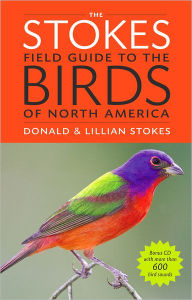
Loggerhead Shrike and Glossy Ibis, recentry at Eagle Lakes Park, Naples, FL. Cool birds. The shrike hunts insects, lizards, small mammals and impales them on thorns or barbed wire then eats them. The beautiful gloss on the ibis is visible in full sun. This is a wading bird that feeds on insects in marshy areas by probing into the mud with its bill. For more on these birds and to ID all the birds of North America see our best-selling field guide, The Stokes Field Guide to the Birds of North America.
Saturday, January 23, 2016
American Flamingo has shown up at Bunche Beach, FL!
American Flamingo
This beautiful bird thrilled birders when it showed up at a beach preserve in FL called Bunche Beach, in Ft. Myers, located near Sanibel, FL. No one knows where it came from. It is not banded so the thought is it is a wild bird, not escaped from captivity. Wild flamingos have been showing up in FL and one was seen at Ding Darling NWR, Sanibel, last summer.
Tuesday, January 12, 2016
Amazing Bald Eagle Photo!
This amazing photo of 2 Bald Eagles greeting one another in a unison call display took place in my Sanibel, FL backyard. One eagle was sitting in the tree then the other landed next to it and they both tipped their heads up and loudly called together with a loud upward squealing sound, unlike their usual weak chattering calls. These eagles are a mated pair and have nested nearby for probably several years. Such unity expressed in this photo of their pair bond.
Monday, January 11, 2016
Black-crowned Night-Heron coming in for landing!
Black-crowned Night-Heron coming in for a landing. These herons, unlike the ones you usually see are active at night, or in dim light, more rarely during the day. So when the sun goes down watch for them coming out of their daytime sleeping spot and becoming active. Listen for their "wok" calls. They breed across much of the country and winter in coastal areas and parts of the South and West. Always fun to see!
Thursday, January 07, 2016
Yellow-throated Warbler Beauty!
This beautiful Yellow-throated Warbler (Setophaga dominica) was in J.N. Ding Darling NWR yesterday and found a snack of a tasty caterpillar. This warbler breeds in much of the lower 2/3 of the eastern part of the country and winters in FL and parts of the Gulf Coast. There are two subspecies. Setophaga dominica dominica is found from s.e. NJ-s. FL and has variable amounts of yellow in the supraloral area. Setophaga dominica albilora is in the rest of the range and has a usually white supraloral area. So this bird is most likely of the subspecies dominica. Yellow-throated Warblers only winter in very south FL, not usually breed there. So this bird may be a winter visitor, like us! Look for them in your area and if you visit FL in winter! For complete information on the subspecies of birds, see our The Stokes Field Guide to the Birds of North America, a must-have for birders who want to be informed.
Wednesday, January 06, 2016
Brrr, it can get cold even in FL says this Prairie Warbler!
Prairie Warbler
This Prairie Warbler was foraging at the sunny south edge of a parking lot in the recent cool temps and high winds on Sanibel, FL. It was joined by 2 Blue-gray Gnatcatchers and a few other birds. a Pay attention to what birds do under different weather conditions to gain a better understanding and appreciation of them.
Tuesday, January 05, 2016
Short-tailed Hawks! So cool!
We've seen two different Short-tailed Hawks in the last several days here on Sanibel, FL. Lucky us! The light morph was over J.N. Ding Darling NWR and we saw the dark morph over the Pond Apple Ponds. Short-tailed Hawk, is a sought-after Florida speciality for birders and not easy to see. This bird breeds primarily in southern and central Florida and a little in southern AZ and south TX.
The Short-tailed Hawk comes in two morphs, a light morph, shown here, and a dark morph. Dark-morphs are dark below with blackish brown body and wing coverts, paler flight feathers and tail, and dark trailing edge to wings. Short-tailed Hawks mostly soar and may hang in one spot for a time. We almost always see them in flight when we encounter them.
Sunday, January 03, 2016
Beautiful Redhead (duck) seen in J.N. Ding Darling NWR, rare for there!
Happy Birding!
Saturday, January 02, 2016
Thursday, December 31, 2015
Monday, December 28, 2015
Red-breasted Merganser Splish-Splash!
Happy Birding!
Sunday, December 20, 2015
Sanibel-Captiva FL Christmas Bird Count 2015, bird numbers down!
Osprey with fish
This is not NH, where I'm from, it's Captiva, FL with high winds and cold, just for a day.
I am recording the numbers of birds we see today.
So many Ospreys, 69 total, many circling overhead at once, what a treat!
Don, left, and Steve Oresman are the rest of our team, counting the birds on the northern tip of Captiva, FL.
Line ups of Double-crested Cormorants and Brown Pelicans.
And these Turkey Vultures posed nicely, adult on left, juvenile on right.
Hiding in mangroves out of the wind was this juvenile Tri-colored Heron.
Thursday, December 10, 2015
Thursday, December 03, 2015
Great White Heron in NH, What??
Great White Heron
Recently there's been a Great White Heron in Litchfield, NH, which is way out of range for this bird usually found in south Florida (my photo is from Sanibel Island, FL). It rarely has been seen outside this range. MA has two accepted records of this form, one record is from RI and there is a Wells, ME report in June 2013. It also has shown up as far north as Nova Scotia. Not a separate species, it is considered a white subspecies of the Great Blue Heron. It has a massive bill which is yellowish with a dark culmen, dull yellow or horn colored legs and feet and bluish facial skin.
Great Egret
Do not confuse it with a Great Egret which is smaller, has black legs, yellow bill and yellow facial skin and is much more common in much of the country. Keep on the lookout who knows where a Great White Heron may turn up.
Subscribe to:
Posts (Atom)


